Supercomputing Center Uses Long-Distance Optical Cable G 652D
Supercomputing centers often use ITU-T G.652D single-mode optical fiber for long-distance, high-speed data transmission due to its low attenuation, wide wavelength compatibility, and support for high-bandwidth HPC interconnects.
Overview of G.652D Fiber
G.652D is a single-mode optical fiber standard defined by ITU-T, optimized for the 1310 nm zero-dispersion wavelength but also suitable for the 1550 nm region, making it versatile for both analog and digital transmission in long-distance links (ITU-T G.652, 2024) . The “D” variant specifically improves macrobending performance, reducing signal loss when the fiber is bent, which is critical in dense cabling environments or campus-scale HPC deployments . Its low attenuation and controlled chromatic dispersion allow for high-speed, long-distance optical links without significant signal degradation.
Role in Supercomputing Centers
Supercomputing centers rely on high-bandwidth, low-latency interconnects to connect compute nodes, storage, and accelerators across large facilities. G.652D fiber supports these requirements by:
- Long-distance transmission: Its low attenuation enables links spanning several kilometers without repeaters, ideal for campus-scale HPC clusters .
- High bandwidth: Compatible with modern optical interconnects like Linear-drive Pluggable Optics (LPO) and Near-Package Optics (NPO), which can achieve speeds of 800G and above while minimizing latency and power consumption .
- Flexibility and reliability: The fiber's improved bend resistance allows dense cable routing in data centers without compromising signal integrity .
Integration with Optical Interconnect Technologies
Modern HPC systems increasingly adopt LPO and NPO architectures to reduce latency and power consumption. In these setups:
- LPO removes DSPs from the optical module, relying on analog signal processing to drive the optical link, which reduces power by 30–50% and lowers latency .
- NPO places the optical engine close to the xPU (GPU, NPU, or switch), minimizing channel loss and supporting high-bandwidth transmission with superior thermal management . G.652D fiber is compatible with these architectures, providing a robust physical medium for ultra-high-speed optical links across the supercomputing center.
Practical Considerations
- Indoor/outdoor deployment: G.652D fibers are often used in indoor/outdoor cables that meet fire safety standards, suitable for campus-scale HPC networks .
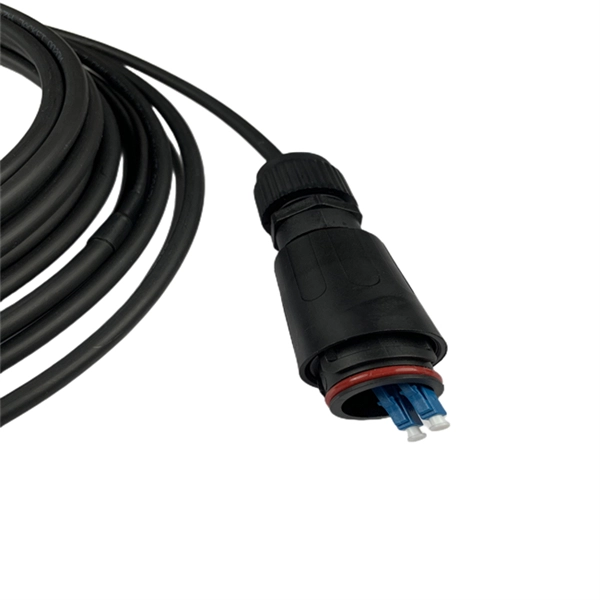
- Pre-connectorized cables: To reduce installation time and avoid splicing, supercomputing centers often use pre-terminated G.652D cables .
- Standards compliance: In North America, installations typically follow ANSI/TIA and NEC standards, while in EMEA, ISO/IEC and EN standards are referenced .
Conclusion
By using G.652D single-mode fiber, supercomputing centers achieve high-speed, low-latency, and reliable optical interconnects over long distances. Its compatibility with advanced optical architectures like LPO and NPO ensures that HPC clusters can scale efficiently while maintaining energy efficiency and signal integrity. This makes G.652D a preferred choice for modern high-performance computing environments.
 Factory
 G.652 Single-Mode Fiber: Characteristics and Applications
Whether in long-distance communication, access networks, or data centers, G.652 fiber will provide a solid foundation
 Factory
 Optical interconnection networks for high-performance systems
Implementing optical interconnects for a system with 10 K computing nodes entirely with optical cables and optical switches remains
 Factory
 G.652.D vs G.657.A1 vs G.657.A2: What''s the Difference?
Explore the differences between G.652.D, G.657.A1, and G.657.A2 fiber optic cable specifications. Learn about their
 Factory
 What is G652D Fiber Optic?
In summary, for long transmission distances exceeding 100 km (like LAN and MAN) and with cable curvature radii
 Factory
 Optical Fiber Single-Mode Fiber G652.D (008)
Datasheet: GD055683v12 SPECIFICATION FOR LOW WATER PEAK SINGLEMODE OPTICAL FIBER ITU-T RECOMMENDATION
 Factory
 Standard single-mode fiber introduction and classification
In addition to extending the operating wavelength outside the region, G.652C other fiber properties and G.652A is
 Factory
 G652D vs G657 Fibers: Key Differences in Bend Resistance
Compare G652D, G657A1/A2, and G657B2/B3 single-mode fibers: bend radius, attenuation, and ideal uses.
 Factory
 Exploring Sc Apc G652d Optic Fiber: Material Grades, Properties, and Uses
Available in various configurations, SC APC G.652D fiber cables are engineered to meet diverse environmental and performance
 Factory
 Datacenter Fiber and Cable Standards Insights
Data collected thus far indicates that either ITU-T G.652D, G.657A1 or G.657 A2 fibers are typically specified in single mode
 Factory
 Datacenter Fiber and Cable Standards Insights
Even if G.652D is specified, cable manufacturers may choose G.657A fibers to achieve cable performance requirements. All
 Factory
 G652D vs G657A vs G657A2: Comparing Single-Mode Optical Fibers
Learn the key differences between G652D, G657A, and G657A2 single-mode optical fibers, including bend
 Factory
 Optical interconnection networks for high-performance systems
The use of active optical cables (AOCs) in supercomputers has increased significantly since they were introduced in 2005 . The
 Factory
 G.654.E Fibre Cable
However, conventional G.652.D optical fibres are nearing their technical limits for high-capacity, long-distance transmission.
 Factory
 ITU-T RECOMMENDATION
Characteristics of a single-mode optical fibre cable Reedition of CCITT Recommendation G.652 published in the Blue Book, Fascicle
 Factory
 G652D Fiber: Advanced Optical Solution for High-Performance
g652d fiber G652D fiber represents a significant advancement in optical fiber technology, serving as the backbone of modern
 Factory
 G652 Fiber
G.652D is the type of optical fiber in the optical cable, which represents non-dispersion-shifted single-mode
 Factory
 ADSS Cable Specifications G652D Fiber | PDF | Optical Fiber
ADSS optic fiber cable 48 G652D core - Free download as PDF File (.pdf), Text File (.txt) or read online for free. This document
 Factory
 What Is G.652 Fiber? G.652 vs G.652.D, G.652 vs G.655
Today''s OS2 fibers are generally G.652.C or G.652.D, and the A and B categories are less used. The table below
 Factory
 Optical Fiber Types
NZ-DSF supports high-power signals and longer distances, as well as closely spaced DWDM (dense WDM) channels at rates of 10
 Factory
 G.652 : Characteristics of a single-mode optical fibre and cable
Recently posted - Search Recommendations G.652 : Characteristics of a single-mode optical fibre and cable
 Factory
 G.657A1, G.657A2, G.652D, and G.657B3
Mainly used for short-distance wiring in FTTX (Fiber To The Home) and special cable structures, such as semi-tight
 Factory
 Reusing Single-mode Fiber? Here''s What the G.652D and G
SMF standards for long-distance optical communications – ITU-T – were developed by the International
 Factory
 ITU-T Recommendation database
Recommendation ITU-T G.652 describes the geometrical, mechanical and transmission attributes of a single‑mode optical fibre and
Factory Passive Connectivity Solutions | High Speed Fibre (Fiber) | STL Tech
STL provides ultra high fiber count optic cable connectors & solutions to lower network cost, improve performance, and maximize
 Factory
 Recommendation ITU-T G.652 (08/2024)
This document outlines the specifications for a single-mode optical fiber and cable designed for use around
 Factory
 Recommendation ITU-T G.652 (08/2024)
This Recommendation describes a single-mode optical fibre and cable which has zero-dispersion wavelength around
 Factory
 G.652.D Single-mode Low Water Peak Fiber Specifications
ITU-T Compliance Meets or exceeds ITU recommendations for G.652.D and the IEC60793-2-50 type B1.3 Optical Fiber Specification